IPB University Master’s Students Explore Circular Economy Practices Through Field Trips
IPB University Master’s Students Explore Circular Economy Practices Through Field Trips
Master’s students from the Resource and Environmental Economics Program at IPB University participated in two field trips organized as part of newly developed circular economy courses under the Capacity Building in the Field of Higher Education: Building Capacities for a Transition to a Circular Economy (CEBCAT) project. The CEBCAT initiative aims to strengthen circular economy education in Southeast Asia by integrating sustainability concepts into higher education curricula and enhancing students’ practical learning experiences.
 |
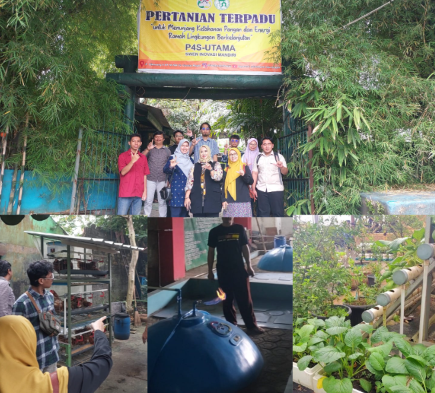 |
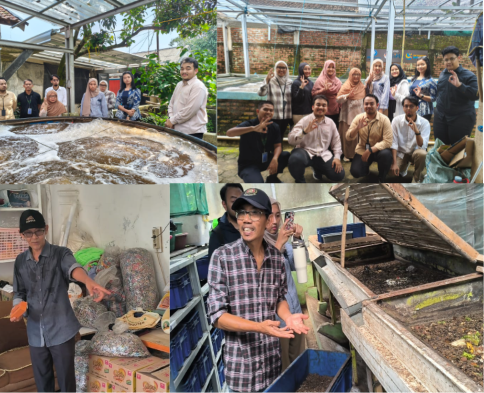
| 1. Cibanteng Village | 2. PT. SWEN Inovasi Mandiri (company) |
On 12 May 2026, students enrolled in the Food and Energy Circular Economy course visited Cibanteng Village, Bogor, to observe the application of circular economy principles at the community level. During the visit, students learned about sustainable tilapia farming, low-carbon development practices, and compost production from organic waste. The field trip provided valuable insights into how local communities can improve resource efficiency while supporting environmental sustainability and rural livelihoods.
A second field trip was conducted on 13 June 2026 for students taking the Principles and Policies of Circular Economy course. The students visited PT SWEN to explore an integrated circular economy system that connects livestock farming, fisheries, fertilizer production, and agricultural activities. Through discussions with practitioners and direct observation of the production system, students gained a deeper understanding of how circular economy principles can create synergies between sectors by transforming waste into valuable resources.
These field trips complemented classroom learning by exposing students to real-world applications of circular economy concepts. As part of the CEBCAT-supported curriculum, the activities are expected to strengthen students’ analytical and practical skills in designing sustainable solutions for resource management, environmental protection, and economic development.
Contact:
Eva Anggraini (evaanggraini@apps.ipb.ac.id)